
Night Vision Depth of Field Booster
Because night vision devices use large aperture lenses to collect as much light as possible, the problem is that the depth of field with large aperture lenses is very narrow. Objects in the foreground or background from the object being focused upon are so blurry that they cannot be discerned.
Until now the only option available to increase depth of field was to place an aperture over the objective lens and reduce its entry diameter. This also reduced its light gathering capability, defeating the whole purpose of a large, light gathering lens.
e-Vision has a solution. Our lens increases the depth of field with virtually no light loss, no moving parts and no aperture is used. It is all electronic, extremely light weight, and consumes very little power. It may be activated by a remote switch or wireless signal, allowing the user to keep their hands on their equipment.
e-Vision has a patented working prototype and is seeking a partner to scale up and commercialize this technology.
Below are images taken through a PVS-14 with an Elbit thin filmed white phosphor tube (supplied by Steele Industries of Bradenton, FL).
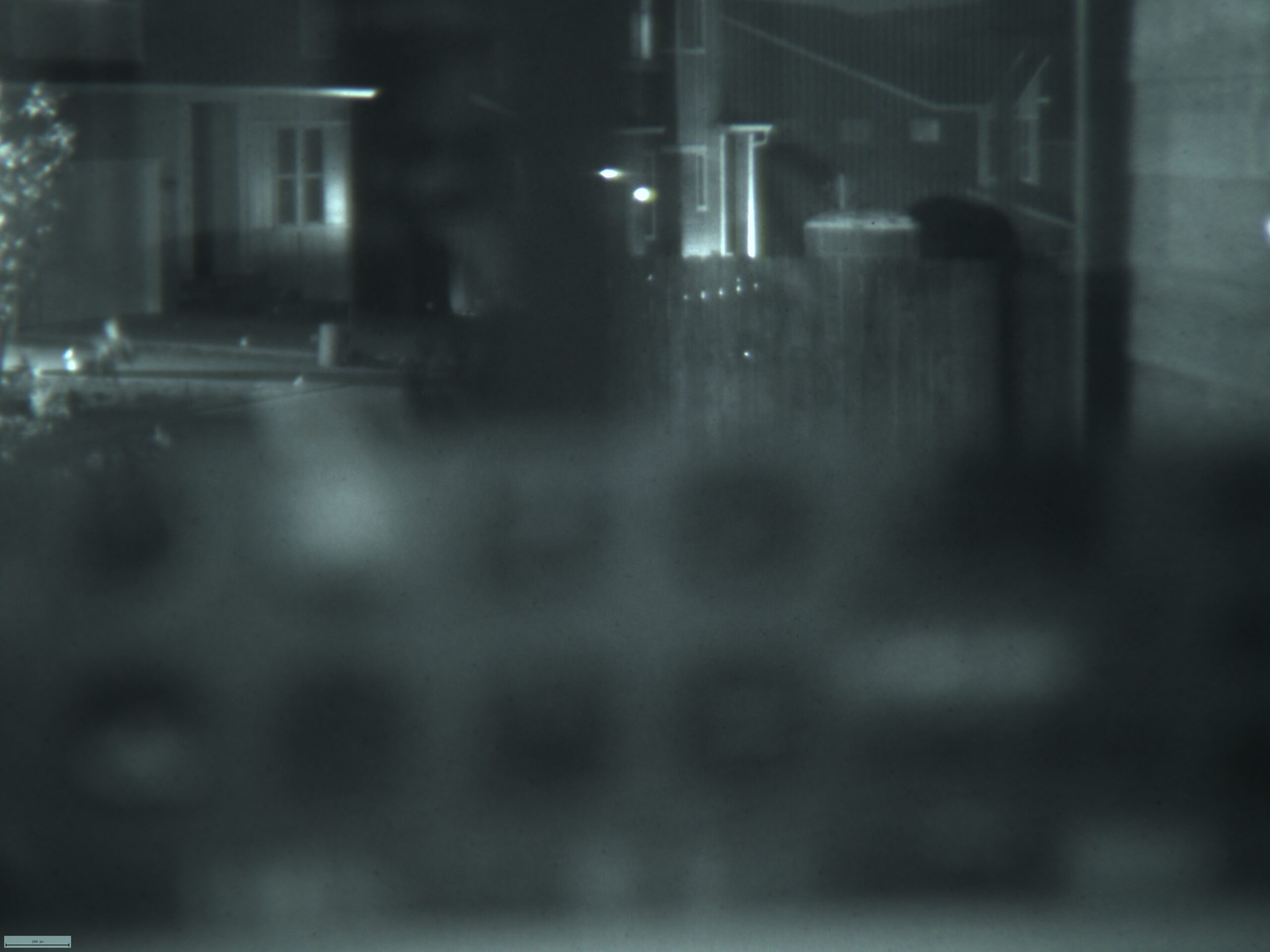
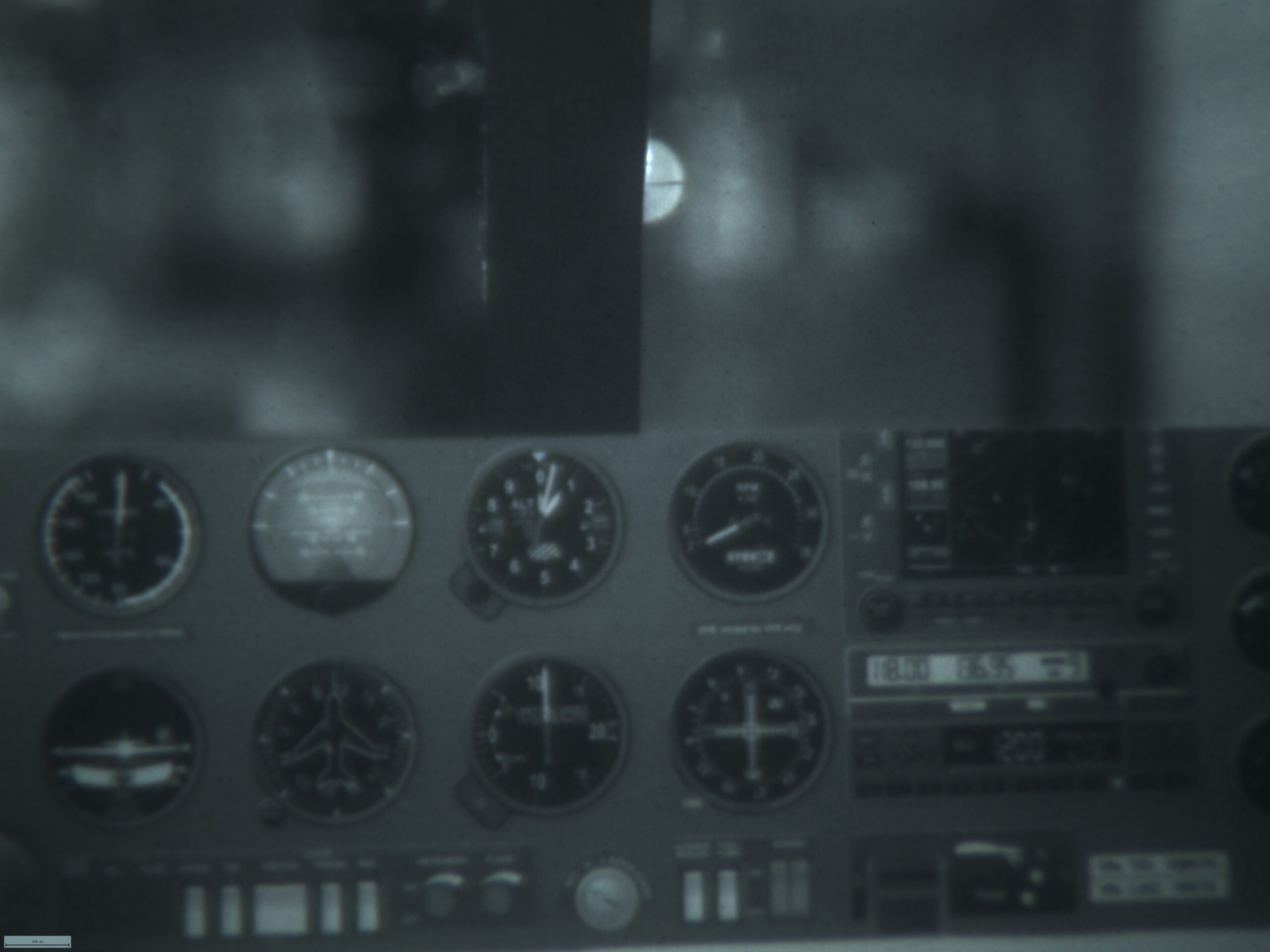
Below are two actual pictures taken through a PVS-14 with a White Phosphor Gen 3 tube using the manual “twist the lens” focus method. The top image shows the PVS-14 focused on a far target while the lower image shows it being focused on a near target. While one of the near or far objects is in focus the other near or far object is completely blurry.
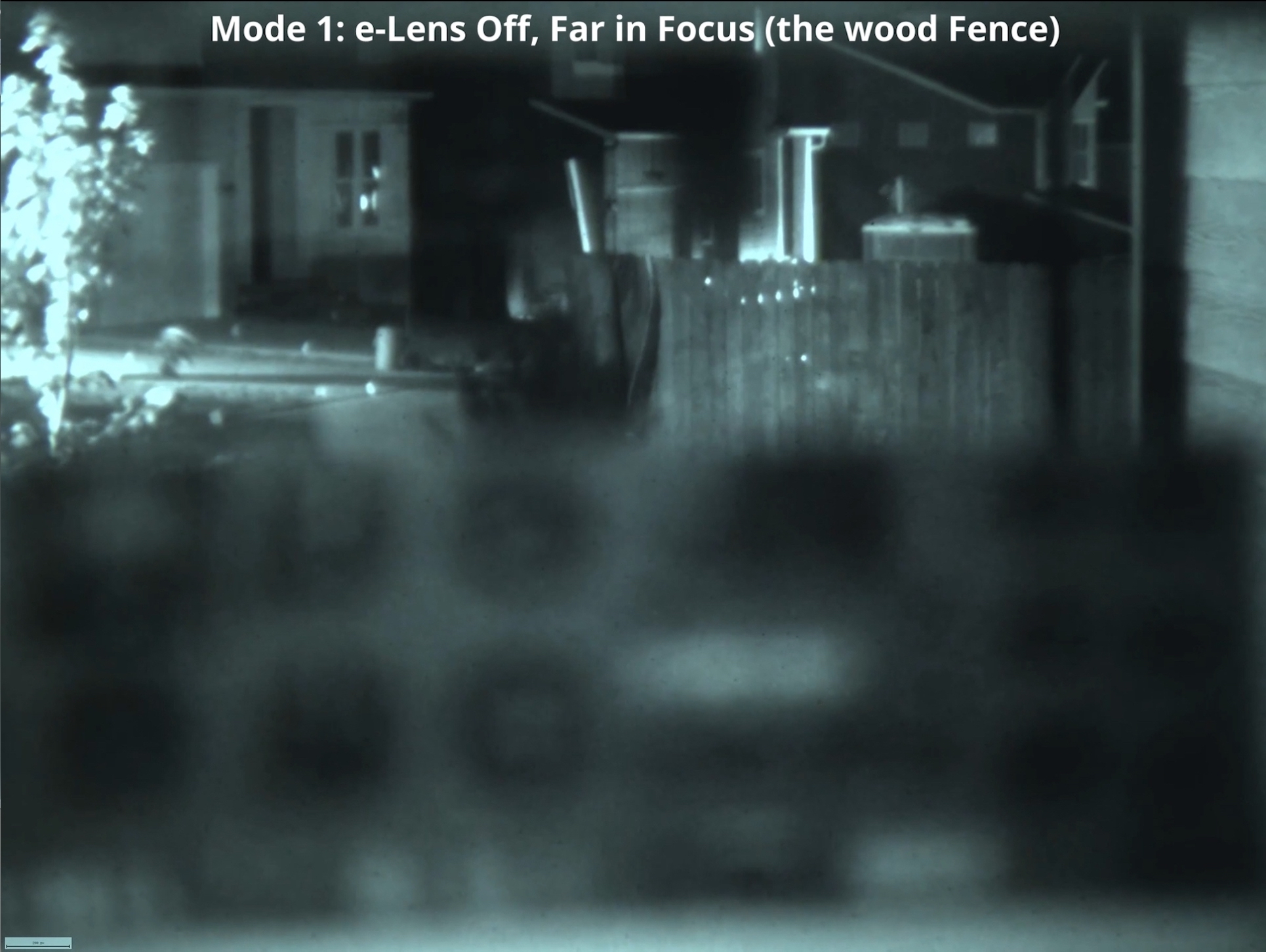
e-Vision Lens in Mode 1
In this mode, the -Vision Lens is switched off and the plane in best focus is set by twisting the manual focus on the PVS-14 lens.
In this state the near objects are too blurry to discern.
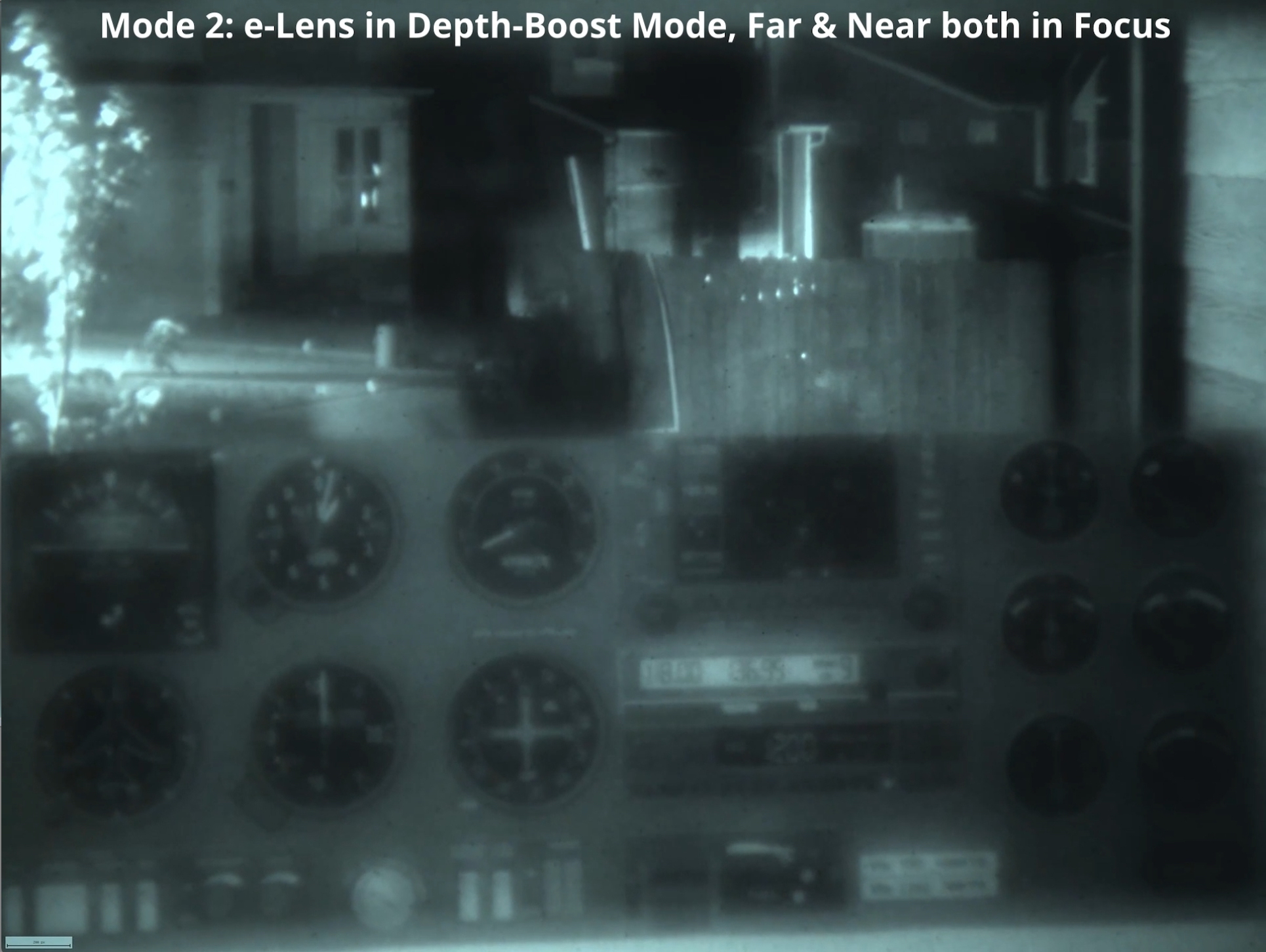
e-Vision Lens in Mode 2
When the e-Vision Lens is switched to Mode 2, the far objects remains in focus (with some contrast loss) and the near objects come into focus. In this state, both the far and near objects are in focus simultaneously. Although some contrast is lost, the objects in both planes are clear enough to discern what they are.
If greater contrast is required for the far image, the lens is switch back into mode 1.
If greater contrast is required for the near image, the lens is switched to mode 3 (see below).
.
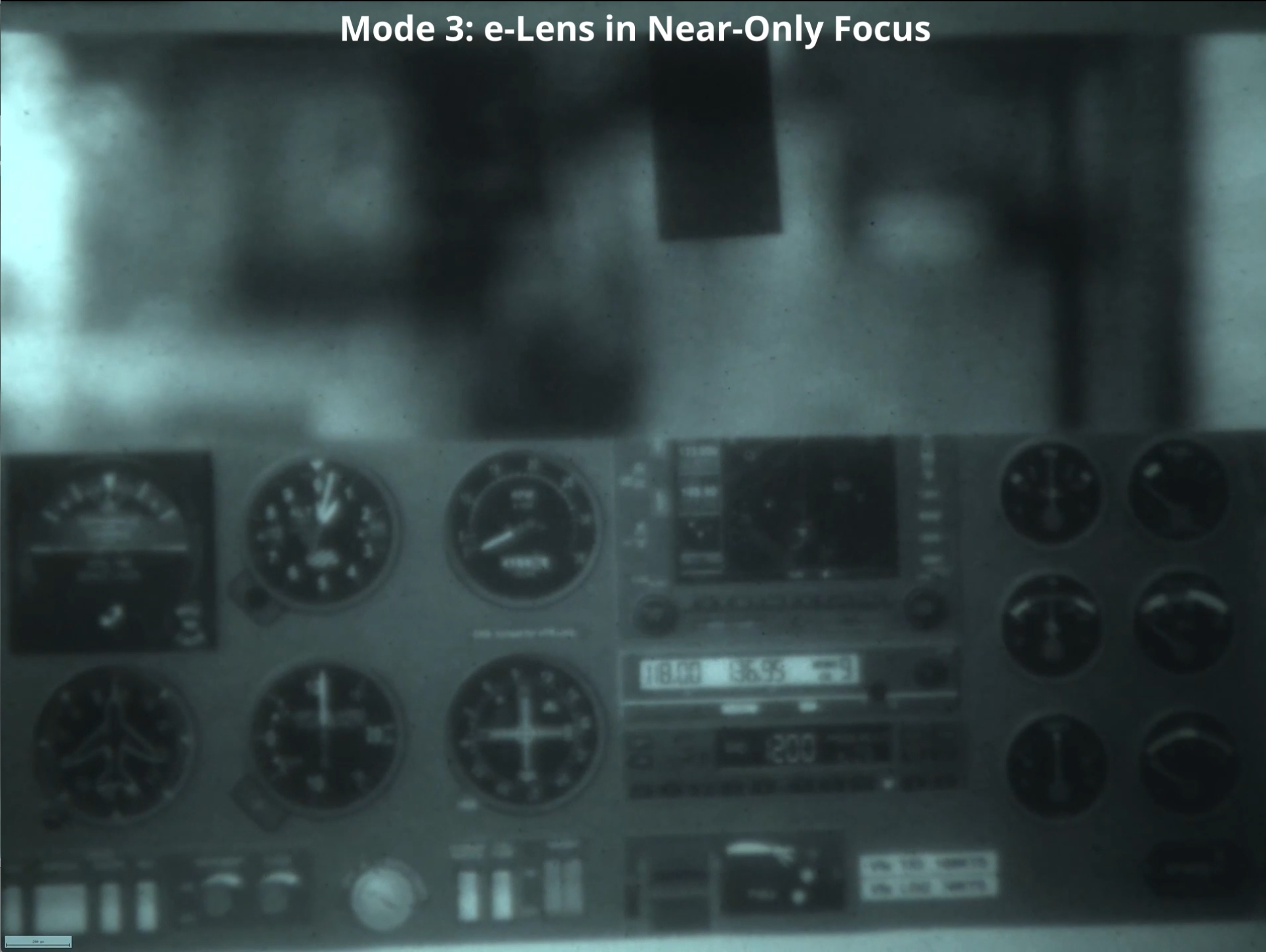
e-Vision Lens in Mode 3
Mode 3 brings the near image into better contrast, but the far objects then become too blurry to discern. Mode 2 may be sufficient so mode 3 may not be required.
Summary of Features and Benefits
- Expands the Depth of Field so that more of the scene is in focus, simultaneously, improving Situational Awareness.
- May be switched on and off remotely so the user is not required to remove their hand from their equipment, weapon, flight controls, steering wheel, etc., as they must do with today’s product offerings to twist the focus adjustment.
- No moving parts so it may be made to be very robust.
- No aperture is used.
- Very lightweight. May be less than an ounce.
- Very little light loss. May be less than 5%.
- Low power consumption. May be powered by a small battery.
- Multiple devices may work together as one, making depth of field adjustments simple for binocular and quad systems. This may be especially useful for use with the GPNVG Panorama system that has four independent focus knobs.
Actual test footage of e-lens by eVision
For more information, email to nightvisioninfo@evisionoptics.com